

Overview
The cost of a hair transplant in Turkey varies depending on the procedure, number of grafts, surgical technique, clinic, and services included in the package. However, choosing a clinic based solely on the lowest price or highest graft count can overlook important factors affecting treatment quality and long-term results. This guide explains how to compare hair transplant quotations, evaluate donor hair preservation, understand FUE and DHI techniques, assess surgeon qualifications, and identify additional expenses. It also highlights the importance of postoperative care, medical support, and transparent pricing when selecting a hair transplant clinic in Turkey.
Hair Transplant Turkey Cost: What Should You Compare Beyond the Price?
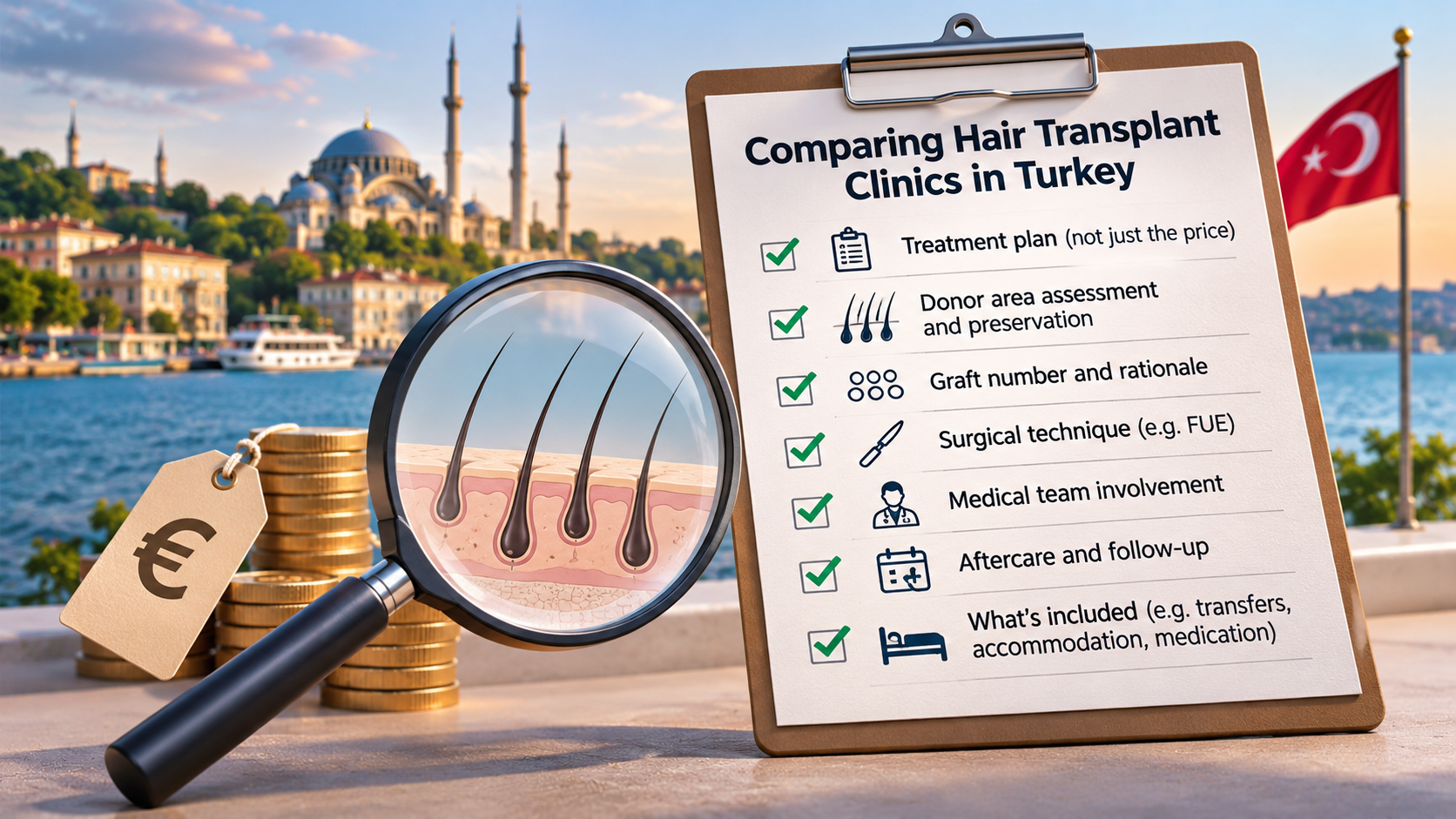
While the advertised cost of a hair transplant clinic in Turkey might appear refreshingly straightforward in terms of pricing - one package, one price, and one list of included services even seemingly similar quotations can actually refer to entirely different treatments, degrees of medical intervention, and aftercare.
This is crucial, since a hair transplant is surgery, which uses a limited amount of donor hair. Pre-treatment, treatment, and post-treatment decisions will affect your hair in one way or another for years to come. While a low price is good in and of itself, it can also be a great value for money only if the planned treatment is right for you.
As recent research published in 2026 has emphasized once again, donor preservation is crucial when considering hair transplant clinics. Clinical review of FUE donor-site management reveals dangers related to overextraction or poor distribution of donor hair, such as scarring, visibility, and lack of potential donor areas for future procedures. This review makes a significant statement: high estimates of a graft count do not necessarily indicate a good treatment plan. The extraction process is as crucial as the number of grafts.
So the more useful question isn't simply, "How much does a hair transplant in Turkey cost?" It's, "What exactly am I being offered for that price, and is it the right treatment for me?"
Why Do Hair Transplant Prices in Turkey Vary?
There is great variation between published costs for hair transplants in Turkey. While some hospitals publish costs exclusive of accommodation and transfers, others publish costs inclusive of these extra services. Moreover, costs per hair graft are quoted, along with fixed packages. As a result, there is no single reliable figure for what every patient will have to pay. The cost varies depending on the proposed procedure, method, number of grafts, and the additional services.
An analysis of costs per hair graft can help in comparing clinics that follow similar pricing methods. But one should not make decisions solely based on costs per hair graft. This is because the number of hairs per graft is variable, and there is also variation in the technique and the services that may be offered.
Why the Number of Grafts Shouldn't Be Your Only Comparison
Numbers of grafts are frequently compared when considering different clinics' quotes. This clinic recommends 2,500 grafts, but another clinic suggests 3,000. It seems quite natural to believe that a greater number would mean better value. However, it is crucial to keep in mind that the figure should be considered together with your donor supply, hair characteristics, and pattern of hair loss.
The graft is a naturally occurring unit of several or a single hair. The follicular units are extracted during the follicular unit extraction procedure and transplanted into the recipient area in which more hair is needed. The donor area is a limited resource. Harvesting too many follicles or extracting them too densely may lead to thinning and limit your chances for any further surgery.
It becomes clear that there are many more things to consider apart from the size of the recipient area when choosing a reasonable hair transplant plan. Donor density, hair caliber, skin characteristics, and distribution of existing hair on your scalp are factors to take into consideration. Age and possible progression of hair loss in the future are important factors too. The hairline created for you by the surgeon should account for the future thinning behind
This is true even when a previous transplant makes it necessary to do some repair. The donor reserve might be smaller, meaning that the surgery may need to concentrate on correction of an unnatural hairline or handling extraction scars instead of performing another round of hair transplants.
It would be wise to ask the clinic where it comes from when receiving a graft quotation. Is it based on an analysis of your donor area? Which zones will be worked on, and what is the reasonable density of the transplanted hair follicles? Is future hair loss taken into consideration?
When receiving a graft quotation, it should make clear why a particular number of grafts is used. It should take into account not only how much hair is going to be added but also the amount of donor hair a particular patient has and how much it could lose in the future.
The key point here is the difference between the number of grafts a clinic can provide and those that could be reasonably harvested from the donor area of a particular patient.
In a review in 2026 on donor site preservation using FUE, the potential dangers posed by the overextraction and uneven extraction of hair follicles, including thinning of the donor site and depletion of the donor site, have been highlighted. The review is structured in a way, and the authors behind the review have links to a hair restoration company and clinic.
How Do Hair Transplant Clinics Calculate Their Prices?
Clinics employ different schemes for calculating prices. Some clinics base their prices on a per-graft rate; others provide packages with fixed prices covering specific procedures and services. There is no absolute advantage in one approach or another; what really matters is your understanding of how your quotation works and the way changes in the treatment scheme influence the price.
Under per-graft payment, the price is related to the number of follicular units applied. Let's imagine that the price per graft is 2 €. Then the price of the procedure will be 5,000 € if 2,500 grafts are applied. It's a quite understandable and clear scheme. However, the ultimate price depends not only on the number of grafts estimated but also on the way other services are charged. One must remember that the price quoted can be either for a confirmed treatment plan or only for an estimate of the plan based on the photographs provided.
Package price covers certain treatments under the agreement about price and according to the conditions set by the clinic. This makes the budgeting easier, though one must pay attention to the maximum number of grafts allowed.
Clinicana, a clinic in Istanbul, is a good example of the package approach. Its 2026 prices include the Basic package worth €2,500, which they say is operation only, and the Standard package worth €2,850, adding two nights in a hotel and VIP transfers. Both packages come with FUE or DHI. However, there is a restriction in relation to the DHI treatment within these packages; that is, up to 4,000 grafts of DHI. Their FUE is priced according to the maximum number of grafts from the donor area, rather than individual graft charges. Flight is not included.
These prices belong to Clinicana and are not the average for all Turkish clinics. The final plan of the treatment package is determined after medical consultation.
The distinction between the two packages above is important to note. While the cheaper package lacks hotel stay and transfers, the expensive one might include some costs for traveling to the clinic. It is always better to check what each package actually includes than compare prices of the cheapest options.
You can read more about Clinicana's guide to hair transplant cost in Turkey here.

What Should a Hair Transplant Package Actually Include?
"All Inclusive" is a broad term whose meaning varies from one clinic to another. It could be the treatment itself, including medication, or it could be inclusive of hotel accommodation, airport transfer, translator, follow-up assistance, and more. The only way to know is by reading the quotation.
First is the procedure itself. The quotation should list the treatment procedure, its location, and the amount covered by the procedure. This is very important because you will get to know whether the consultations, pre-operative evaluation, laboratory investigations, local anesthesia, medications, and the next course of action in case of any modifications to the initial evaluation are covered in the cost.
For overseas patients, arrangements play a significant part in determining the overall cost of the process. There are clinics that cover the cost of hotel accommodation and airport transfer in the treatment procedure, while others give quotations for the treatment alone.
Post-operative treatment deserves to be equally considered as surgery itself. Find out about the kind of advice and drugs that will be recommended after the surgery, how your recovery will be monitored by the clinic, and whether there will be any follow-ups once you get back home. If the clinic provides for remote follow-up, find out how often they occur, who analyzes your photographs, and how you can reach out to the clinic.
Extra services might come in useful, but they do not tell much about how comprehensive your planning has been and whether the surgery suits you or not.
Who Actually Performs Your Hair Transplant?
Among the key questions to ask is who will be charged with the medical and surgical phases. The clinic’s branding, facilities, and package do not give any insight into who will evaluate you, design the hairline, harvest the grafts, and create the recipient sites.
This is definitely not an insignificant matter since hair transplantation requires making surgical decisions related to donor harvesting, graft implantation, and how natural the results look. Ideally, you should have access to information about the name of the physician responsible and the specifics of his/her role in the procedure process.
The International Society of Hair Restoration Surgery (ISHRS) has issued a position paper on its stance about the necessity of having hair restoration surgery performed by a duly licensed and trained physician. These tasks include pre-surgical consultation, planning, harvesting of donors, designing the hairline, recipient site preparation, and after-care procedures. However, the position paper also admits that there may be some tasks that can be delegated to other appropriately licensed healthcare workers, provided that such an act is permissible by the law and that it is done under proper supervision by a doctor.
There is some information from the ISHRS 2025 Practice Census about why a patient needs to go past the advertised cost. From the questionnaire, 59.4% of the 153 respondents who answered this question stated that there are black market hair transplant clinics in their city, while in similar findings in 2021, 51% said this was the case. Moreover, 10% of the repair cases in the practice of members are from people who have had transplants in black market clinics, whereas the median is 5%. This requires some contextualization. Firstly, the data is gathered through voluntary responses from ISHRS physician members in different parts of the world and not a survey of all the hair transplant clinics. Also, there is no mention of the frequency of these operations in Turkey. In the 2025 census, 247 responses were collected from 946 members who have valid email invitations, and the report can be found in the full census report.
The place itself is important too. According to Clinicana, their hair transplants are performed at Acıbadem Taksim Hospital in Istanbul. In case you have doubts about whether one or another clinic has the required accreditations, pay attention to the accreditations of the particular hospital at which the procedure will be conducted, since accreditations of other hospitals belonging to the same health care system don't necessarily mean anything.
And in case you are going to travel to Turkey, make sure to check whether the clinic is registered in accordance with Turkey's international health tourism system. In this case, healthcare providers and intermediaries are obliged to have proper certificates.
What Additional Costs Should You Include in Your Budget?
The cost of the procedure is not the sole financial aspect involved. Even when you have booked a package that includes accommodation and transport, you may have to make provisions for airfare, food, extra days at the hotel, travel insurance, and personal expenses. If you are going to be travelling with another person, then there will be expenses incurred for their accommodation and transportation, as well as meals.
There could also be extra costs related to the treatment itself. Any other treatments you choose to undergo, extra appointments, as well as the treatment of body parts like your beard and eyebrows, could be outside the quote you initially received. Determine whether this is something required, optional, or something that the clinic offers, and whether it will result in any more payments later on.
Payment terms deserve a look as well. Find out when payment is due, which methods are accepted, and whether a deposit is required. If you're paying by card or transferring money abroad, currency conversion and bank fees can change the amount you ultimately pay.
A simple way to estimate the real budget is to think beyond the package price:
Total trip cost = treatment package + flights + additional accommodation + meals and personal expenses + optional treatments + payment or currency fees.
It may not be true that all the patients pay for everything, but at least you have a more accurate comparison basis. For instance, let us say that Quote A is €2,400 for the surgery alone and Quote B is €2,800 for surgery with hotel, transfer, blood test, and medication. The cost of Quote A will rise up to €2,890 if the quote requires €260 for the two nights stay at the hotel, €90 for transfer, €60 for blood test, and €80 for the medication. It exceeds Quote B.
A real patient's experience helps illustrate why it's important to look beyond the advertised package price. Jonathan, who runs Hair Transplant Turkey Guide, travelled to Istanbul in January 2025 for a 3,800-graft FUE procedure at Clinicana. He reports paying €2,850 for his treatment, with four hotel nights, transfers, medication, and a year of aftercare support included. Flights and evening meals were additional expenses. His experience shows how useful it is to know exactly what a package covers before travelling.
Does the Hair Transplant Technique Affect the Cost?
It influences the price of the procedure but does not provide any information about the quality of the surgery itself. Among other techniques, you will find such as FUE, DHI, Sapphire FUE, FUT and unshaven FUE in quotes. They differ in harvesting or implanting hair techniques, and your individual case is what will decide which one you need.
FUE implies individual extraction of follicular units from the donor area. DHI normally implies a procedure of inserting grafts with the help of an implanter pen. Sapphire FUE involves the use of sapphire blades for preparing recipient sites. FUT implies harvesting of a strip from the donor area and then separating follicular units from this strip.
They can be priced differently in different clinics or you can pay for a combination of several techniques in one package. For example, Clinicana offers packages that involve FUE and DHI but there is also an option of paying extra for Mega DHI double sessions and Exosome and Stem Cell packages. These packages are selected by the clinic, and it does not mean that anyone can benefit from them.
Instead of choosing a clinic based on some specific technique used by them, it would be better to find out what makes this technique applicable in your case. It is necessary to be aware of the advantages of this method and possible disadvantages, as well as the cost of it.
What Happens If Something Goes Wrong After You Return Home?
When you travel for surgery, much of your recovery takes place after you've left the country where the procedure was performed. That makes aftercare and communication especially important. Before booking, find out who will answer medical questions once you're home, how concerns will be assessed, and what happens if you need an in-person review.
A 2026 review of FUE complications discusses possible problems including infection, bleeding, swelling, folliculitis, scarring, donor-area depletion, poor growth, and unnatural results. It cites large clinical series reporting overall complication rates of approximately 1.2–4.7%, with infection generally reported below 1%. These figures should be interpreted cautiously: the underlying research uses varied definitions and study methods, and some wider complication reviews combine different transplant techniques. They are not a precise risk estimate for every FUE patient or clinic.
Another study from 2026, in the form of a letter to a journal, has reported on two cases of Mycobacterium abscessus infection following FUE at the same clinic in Istanbul but at different times. The genomic analysis revealed an extremely high degree of similarity of these strains, indicating a common source. This case involves two patients and one clinic and cannot provide us with any information about the frequency of such infections in Turkey or other countries. For patients, the value of this case study is the emphasis it places on the importance of infection prevention, clinical standards, and follow-up availability when selecting a clinic.
The right clinic will be able to share its postoperative protocols, complication handling policies, and information about the follow-up procedure for international patients. Having a WhatsApp number for someone in the clinic does not constitute a medical follow-up protocol.
How to Decide Whether a Hair Transplant Quote Represents Good Value
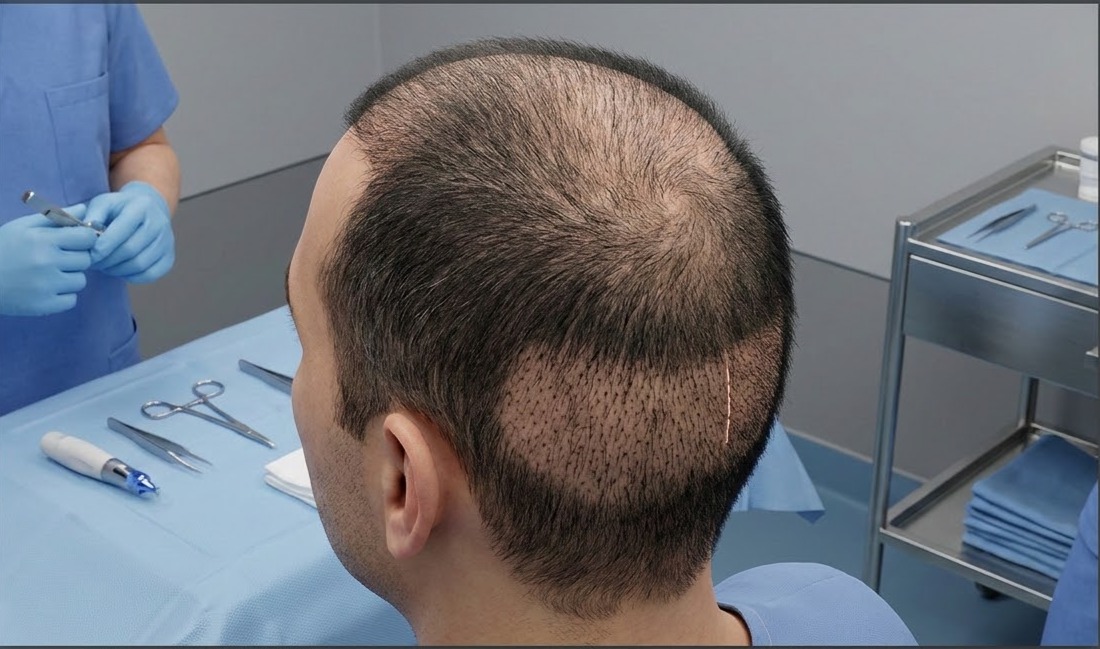
A useful quotation lets you understand both the proposed treatment and the financial commitment. If important details are missing, ask for clarification before comparing prices. A low figure is hard to judge if you don't know how many grafts are planned, who will carry out the surgical stages, or what happens after the procedure.
This comparison brings the main differences into focus:
What to compare | What a clear quotation should explain |
Treatment plan | Proposed graft number, areas to be treated and the reason for the recommendation |
Donor management | How donor density and future hair loss are considered |
Medical responsibility | Responsible physician, qualifications and roles of the clinical team |
Procedure and facility | Technique, treatment location and what the procedure price covers |
Package inclusions | Accommodation, transfers, tests, medication and other services |
Additional costs | Possible extras, second sessions, payment fees and excluded expenses |
Aftercare | Written instructions, follow-up arrangements and support if a problem develops |
Look for consistency between the clinic's medical explanation and its commercial offer. If the consultation recommends one treatment but the package description suggests another, ask which plan is actually being priced. If a clinic promises a high graft count without explaining donor limits, ask how the extraction will be distributed and what that means for any future treatment.
Value isn't simply the lowest price per graft or the longest list of services. It comes from an appropriate treatment plan, qualified medical care, transparent costs, and support that continues after you've left the clinic.
Questions to Ask Before Accepting a Hair Transplant Quote
Before you pay or book travel, make sure you can get clear answers to these questions:
- What treatment are you recommending, and how many grafts do you estimate for my hair loss and donor area?
- How will you protect my donor area and allow for future hair loss?
- Who is the responsible physician, and which parts of the procedure will they personally perform?
- Where will the procedure take place, and what authorisations does the facility hold?
- Which technique will be used, and why is it right for my case?
- Does the price cover the full planned procedure, and what are the graft, session or technique limits?
- What's included beyond the surgery, such as tests, medication, hotel nights and transfers?
- What aftercare will I receive at home, and what extra charges could arise, including a second session?
A clinic that answers these clearly gives you a much stronger basis for a decision than one that leans on a discount, a high graft estimate, or a limited-time offer.
The Best Hair Transplant Quote Is the One You Can Properly Evaluate
There are many clinics and pricing plans available in Turkey, which means it makes sense to compare quotes as part of your treatment planning. Without any additional details, it is difficult to understand what a price means because a price is not useful without a treatment plan. Graft fees, tissue procurement, surgical team responsibilities, package contents, and post-operative care will give you more information about what you get.
If you want to choose a suitable clinic, then do not rely only on one number. Before making a choice, it is important to know the procedure, people who are behind the procedure, services included, and possible extra expenses. It will not guarantee certain results, but a quote will definitely make your treatment choice easier.
Conclusion
Choosing the right hair transplant clinic in Turkey involves much more than comparing package prices or the number of grafts offered. A suitable treatment plan should consider donor hair availability, future hair loss, the surgeon's qualifications, the procedure technique, and the medical standards of the facility. Patients should also carefully review package inclusions, additional expenses, and postoperative support before making a decision.
Ultimately, the best hair transplant quotation is one that provides transparent pricing, a medically appropriate treatment plan, responsible donor management, and reliable aftercare. Taking time to evaluate these factors can help patients make a more informed decision and avoid choosing a clinic based solely on attractive prices or promotional offers.


