

Overview
Retatrutide and tirzepatide are two promising medications developed by Eli Lilly for weight management and metabolic health. While tirzepatide targets two hormone receptors (GIP and GLP-1), retatrutide activates three (GIP, GLP-1, and glucagon), potentially delivering greater weight loss. Clinical trial results show average weight reductions of up to 28.7% with retatrutide and 22.5% with tirzepatide, although these findings come from separate trials rather than a direct comparison. This article explores their mechanisms of action, weight loss effectiveness, side effects, muscle loss considerations, clinical trial findings, and FDA approval status to help readers understand the key differences between these medications. Pasted text(20261110-061548)
Retatrutide vs Tirzepatide: How the Triple Agonist Compares in 2026 Trials
Retatrutide and tirzepatide, both developed by Eli Lilly, work on the same family of gut hormones that regulate metabolic activity. Tirzepatide, FDA-approved since 2022, acts on two hormone receptors, GIP and GLP-1. Retatrutide adds a third receptor, glucagon, and is still investigational. In separate trials, retatrutide has yielded more weight loss: up to 28.7% of body weight compared to about 22.5% for tirzepatide. The first head-to-head results have not yet been published.
That last point matters more than any single number in this article. Here is what the published data show, where the comparison holds up, and where it doesn't.
Retatrutide vs tirzepatide at a glance
| Tirzepatide | Retatrutide | |
|---|---|---|
| Receptors activated | GIP and GLP-1 (dual agonist) | GIP, GLP-1 and glucagon (triple agonist) |
| Status, November 2026 | FDA-approved for type 2 diabetes (2022), chronic weight management (2023) and obstructive sleep apnea with obesity (2024) | Investigational. Lilly plans to file for US approval in early 2027 |
| Average weight loss, obesity trials (top dose) | 22.5% at 72 weeks (SURMOUNT-1) | 28.7% at 68 weeks (TRIUMPH-4) |
| Average weight loss, obesity with type 2 diabetes (top dose) | 15.7% at 72 weeks (SURMOUNT-2) | 20.8% at 80 weeks (TRIUMPH-2) |
| Most common side effects | Nausea, diarrhea, vomiting, constipation | The same stomach and gut effects, plus dysesthesia (an unusual skin sensation) |
| Stopped because of side effects (top dose vs placebo) | 6.2% vs 2.6% (SURMOUNT-1) | 7.7% to 18.2% vs about 4% to 5% across phase 3 trials |
| Head-to-head trial | TRIUMPH-5: about 800 adults, 80 weeks, results not yet reported | Same trial |
What is the difference between retatrutide and tirzepatide?
Both are single, long-acting peptides that mimic hormones released by the gut after a meal. The difference is the number of hormone receptors each one acts on.
Tirzepatide combines two signals. GLP-1 slows gastric emptying and tames appetite centers in the brain. GIP adds to the insulin response and improves how the body handles fat. Together, they made tirzepatide the first "dual agonist" approved for weight management.
Retatrutide keeps both signals and adds glucagon. It might seem odd at first, seeing as though glucagon is the hormone that raises blood sugar. It earns its place by increasing energy expenditure and signaling the liver to burn more fat, while the GLP-1 and GIP signals keep blood sugar in check. In practice, the triple design seems to add weight loss on top of what two receptors deliver, at the cost of some extra side effects.
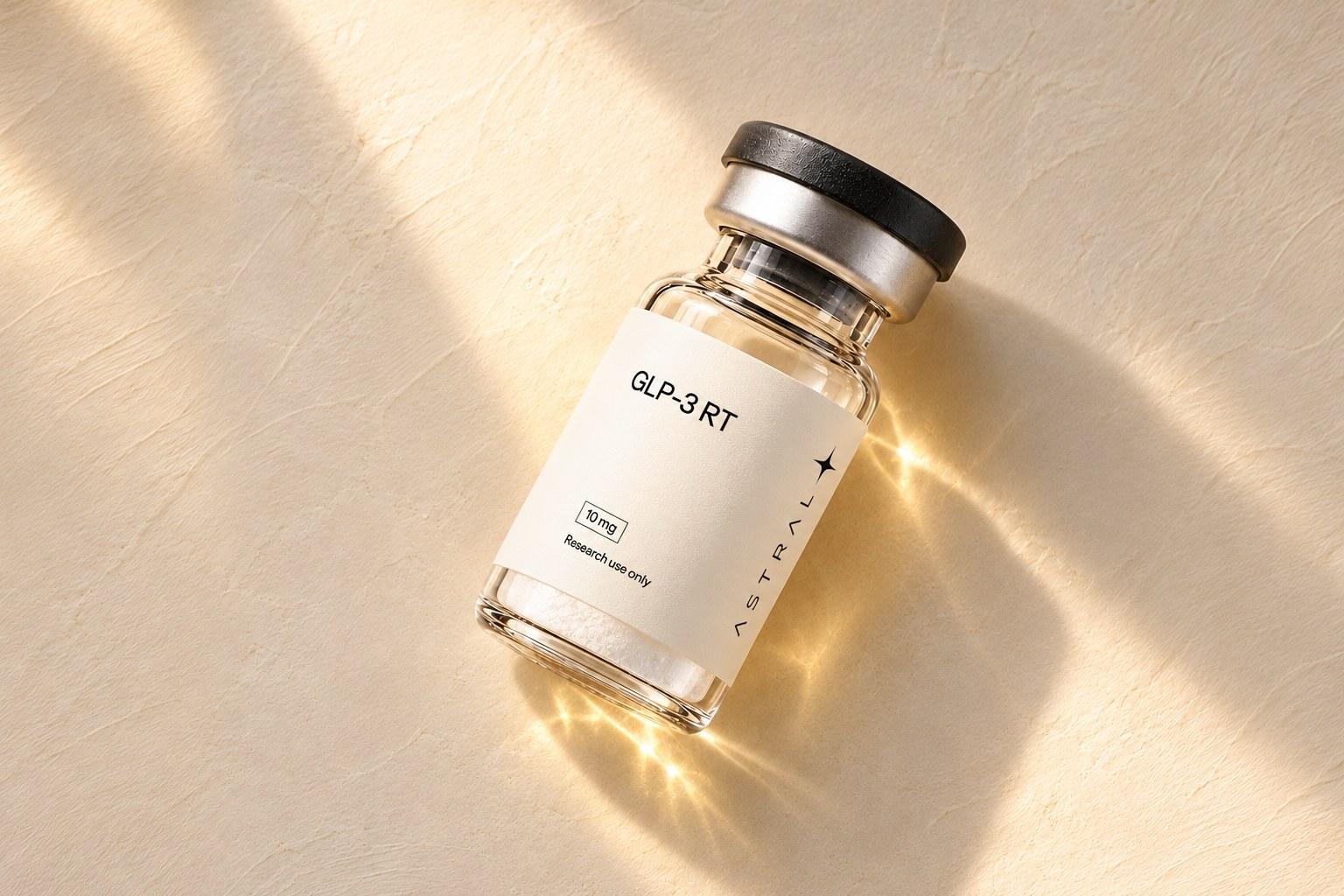
Online, retatrutide is often nicknamed "GLP-3." No hormone by that name exists. The label is shorthand for its three-receptor design, and if you've wondered why retatrutide gets called GLP-3, that explainer walks through the naming.
Retatrutide vs tirzepatide weight loss: what the trials show
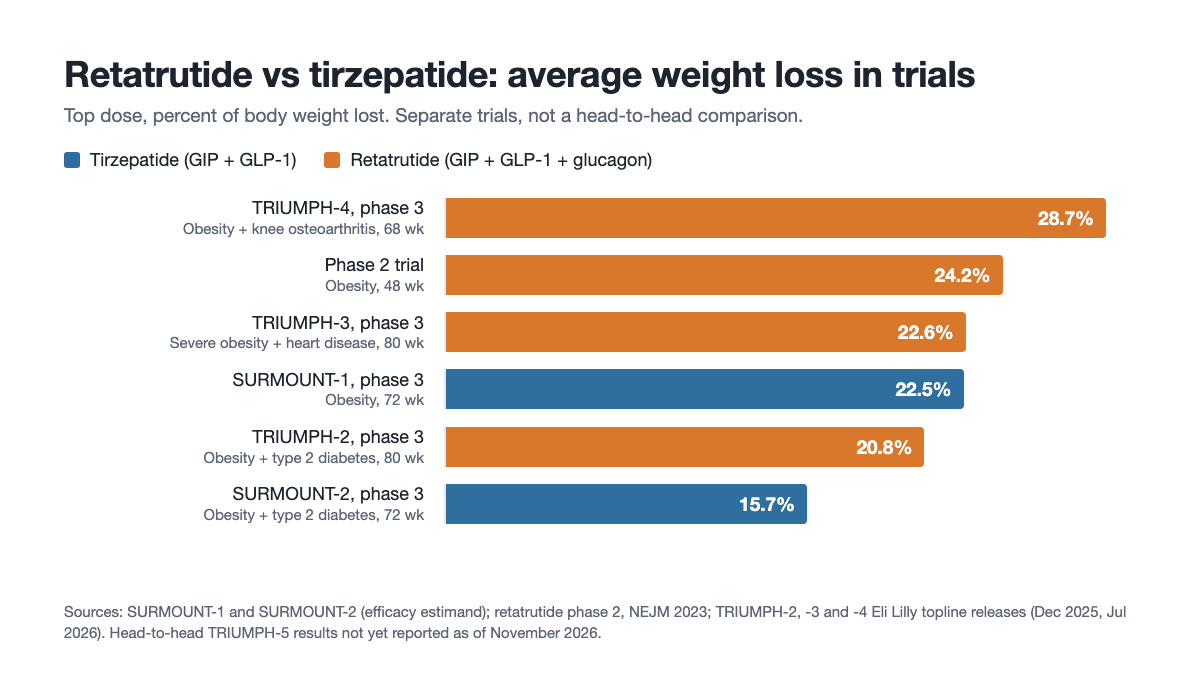
Tirzepatide's main obesity trial, SURMOUNT-1, followed about 2,500 adults without diabetes for 72 weeks. Those on the highest dose who stayed on treatment lost an average of 22.5% of their body weight, compared with 2.4% on placebo. For a closer look at how that weight comes off over time, ClinicSpots has a breakdown of tirzepatide's average weight loss per week.
Retatrutide's numbers came in stages. Its phase 2 trial, published in the New England Journal of Medicine in June 2023, reported 24.2% average weight loss at 48 weeks on the top dose, against 2.1% on placebo. That was the first sign it might beat tirzepatide. Phase 3 has since backed it up. TRIUMPH-4, in adults with obesity and knee osteoarthritis, reported a 28.7% average loss at 68 weeks in December 2025. In July 2026, TRIUMPH-2 reported 20.8% at 80 weeks in adults with type 2 diabetes, and TRIUMPH-3 reported 22.6% in adults with severe obesity and established heart disease.
The diabetes comparison is the clearest of the bunch. People with type 2 diabetes reliably lose less weight on these drugs than people without it. Tirzepatide's SURMOUNT-2 reached 15.7% at 72 weeks. Retatrutide's TRIUMPH-2 reached 20.8% at 80 weeks. Different trial lengths, different patients, but a five-point gap is hard to ignore.
Still, every figure here is a cross-trial comparison. Trials differ in who they enroll, how long they run, and how they count dropouts. A head-to-head trial is the only way to make it definitive.
Retatrutide vs tirzepatide side effects
The two drugs share a similar side-effect profile led by the gut. On tirzepatide, the most common complaints are nausea, diarrhea, vomiting, and constipation, and they cluster around dose increases early in treatment. In SURMOUNT-1, 6.2% of people on the top dose stopped due to side effects, compared with 2.6% on placebo.
Retatrutide shows the same pattern, a little stronger. In TRIUMPH-2, diarrhea affected about a third of participants on higher doses and nausea up to 28%, compared with 13% and 8% on placebo. Discontinuation due to side effects at the top dose varied between 7.7% in TRIUMPH-2 and 18.2% in TRIUMPH-4, compared with roughly 4% to 5% on placebo.
One effect is new. Retatrutide trials report dysesthesia, an abnormal skin sensation such as tingling or sensitivity to touch. In TRIUMPH-4, it showed up in 20.9% of people on the top dose and 0.7% on placebo. Lilly describes these events as mostly mild, and they rarely led people to quit. The phase 2 paper also noted a dose-related rise in resting heart rate that peaked around week 24 and eased afterward, something to watch for in the full phase 3 publications.
TRIUMPH-3 is the trial cardiologists will read most closely. It found fewer major cardiac events overall on retatrutide than on placebo (hazard ratio 0.82), but the count of heart attack, stroke, and cardiovascular death came out slightly the other way (1.12). Both confidence intervals were wide, and neither result was statistically significant. A dedicated cardiovascular outcomes trial is still running.
Retatrutide vs tirzepatide: which is better?
On weight loss alone, the trial data so far favor retatrutide. On everything else, tirzepatide has the advantage of time. It has years of real-world use, a cardiovascular track record, approvals in several conditions and a side-effect profile doctors know how to manage.
The question "which is safer" can't be answered yet. Retatrutide's higher dropout rates and the new dysesthesia signal are real, but its phase 3 papers haven't been published in full, and nothing replaces a direct comparison.
That comparison is coming. TRIUMPH-5 randomized about 800 adults with obesity to retatrutide or tirzepatide for 80 weeks, with percent change in body weight as the main result. Lilly designed it to test whether retatrutide is superior. ClinicalTrials.gov lists data collection finishing in late 2026, so results could appear in 2027.
What about muscle loss?
Any large weight loss takes some muscle with it, and both drugs are judged on how much. In a body-scan substudy of SURMOUNT-1, roughly three pounds of fat came off for every pound of lean mass on tirzepatide, a ratio similar to diet-driven weight loss. For retatrutide, look for the same fat-to-lean split in the full phase 3 publications. Strength training and adequate protein remain the standard advice for protecting muscle during any weight loss, whatever drives it.
Retatrutide vs tirzepatide vs semaglutide
Semaglutide, the single-receptor GLP-1 drug, is the third name in most of these searches. It is the oldest of the three for weight management and, in trials, the least potent. In SURMOUNT-5, the only completed head-to-head among them, tirzepatide produced 20.2% average weight loss at 72 weeks against 13.7% for semaglutide. Each added receptor has, so far, added weight loss: one receptor, then two, then three.
Is retatrutide FDA-approved?
No. As of November 2026, retatrutide is an investigational drug. Lilly says five Phase 3 trials have succeeded and it plans to submit a Biologics License Application to the FDA in early 2027. A standard FDA review takes about a year from filing.
Tirzepatide, by contrast, is approved for type 2 diabetes, chronic weight management, and obstructive sleep apnea in adults with obesity.
Outside Lilly's trials, peptide suppliers already sell retatrutide, including the retatrutide peptide from Astral.
FAQs
Is retatrutide stronger than tirzepatide?
In separate trials, yes. Retatrutide's top dose produced up to 28.7% average weight loss in phase 3, against about 22.5% for tirzepatide's top dose. The two have not yet been compared in the same trial. TRIUMPH-5 will do that.
Is retatrutide safer than tirzepatide?
It's too early to say. Retatrutide has shown higher dropout rates for side effects and a new skin-sensation effect called dysesthesia. Tirzepatide has years of approved use behind it.
When will retatrutide be available?
Lilly plans to file for FDA approval in early 2027. On a standard review timeline, a decision would land around early 2028.
Is retatrutide the same as GLP-3?
"GLP-3" is an online nickname for retatrutide. There is no GLP-3 hormone. Retatrutide acts on GIP, GLP-1 and glucagon receptors.
Has anyone compared retatrutide and tirzepatide head-to-head?
Yes, in TRIUMPH-5, which enrolled about 800 adults. Its results had not been reported as of November 2026.
Conclusion
Retatrutide looks like the stronger choice for weight loss on paper, while tirzepatide is the one doctors can prescribe today. The honest comparison waits on TRIUMPH-5. Until then, every "retatrutide vs tirzepatide" claim, including the numbers in this article, compares different trials, run in different people, over different lengths of time.


