

Overview
An eye exam is a comprehensive evaluation of your vision and overall eye health. It typically includes a review of your medical history, visual acuity testing, assessment of refractive errors, eye muscle checks, and peripheral vision testing. Depending on your symptoms and risk factors, your optometrist may also perform additional tests, such as a slit-lamp examination, eye pressure measurement, or dilated eye exam, to detect conditions like glaucoma, cataracts, and diabetic retinopathy. Regular eye exams help identify vision problems early and ensure timely treatment with corrective lenses, medications, or other appropriate interventions.
What Happens During an Eye Exam?
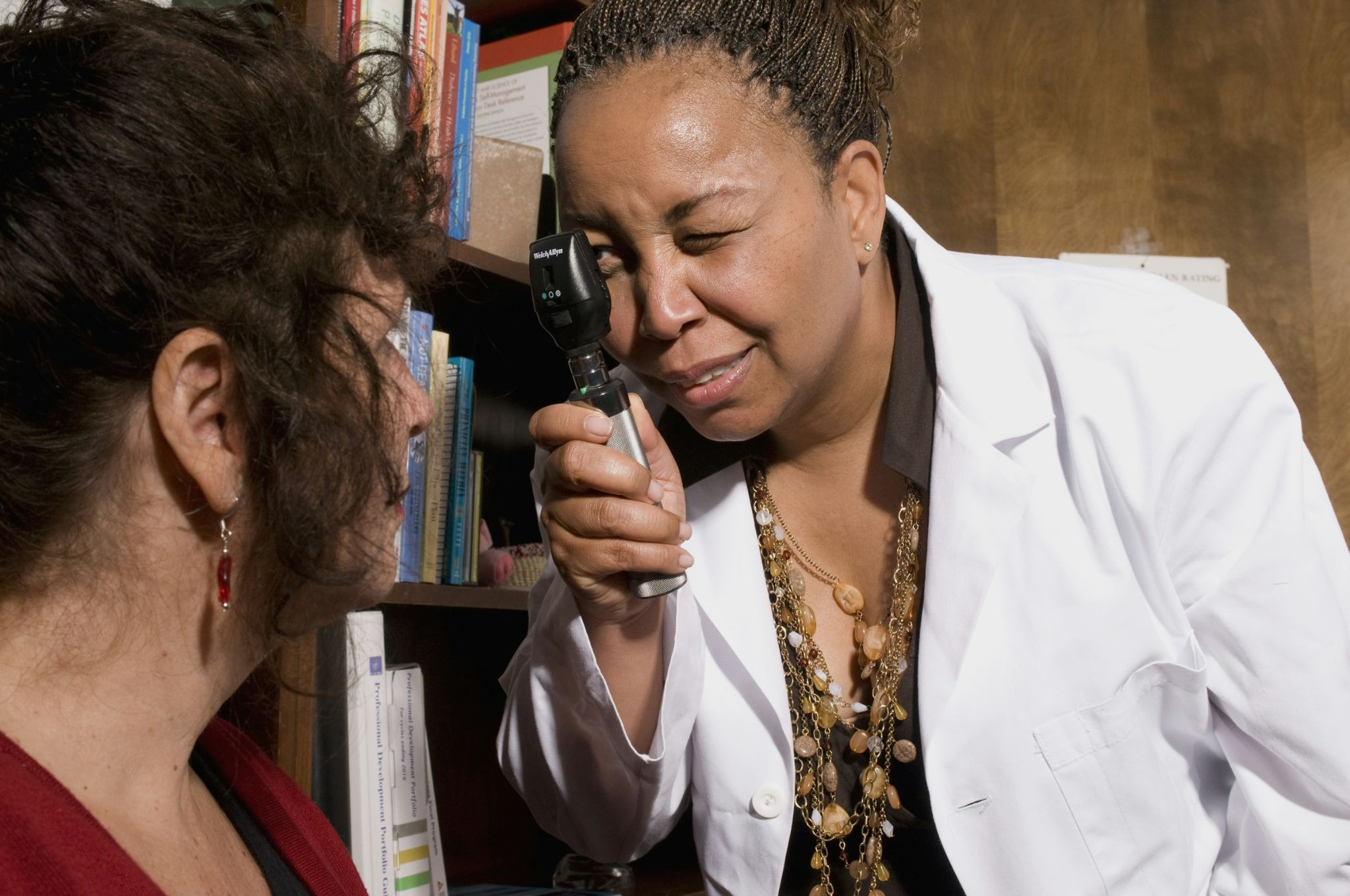
If you haven’t been to an eye exam recently, it may be time to schedule one. Most adults should get an exam every 1-2 years, although you may need more frequent exams if you have certain risk factors.
Keep reading to learn more about eye exams, what happens during an eye exam, and how to prepare.
Preparing for Your Eye Exam
The eye doctor will need some routine information about your general medical history, medications you take, family history, etc. In the past, doctor’s offices would give you these forms to fill out while you waited. But today, they often ask you to fill out an online questionnaire instead. It’s also a good idea to bring your current eyeglass/contact lens prescription with you if you wear corrective lenses.
At the Eye Exam
The optometrist will usually start by reviewing your information and asking questions to determine if you’re currently having any vision issues. Then, they will begin the exam.
Often, the first step is to ask you to read the Snellen chart (the chart with the big ‘E’). This will help determine your visual acuity, which is how clearly you can see at a specific distance.
For example, 20/20 vision is considered standard visual acuity. You could also have better-than-average visual acuity, such as 20/15 vision. Or, you could have lower visual acuity, such as 20/40, 20/70, 20/100, or 20/200 vision. Curious about other types of visual acuity? Learn more in this article on 20/100 vision.
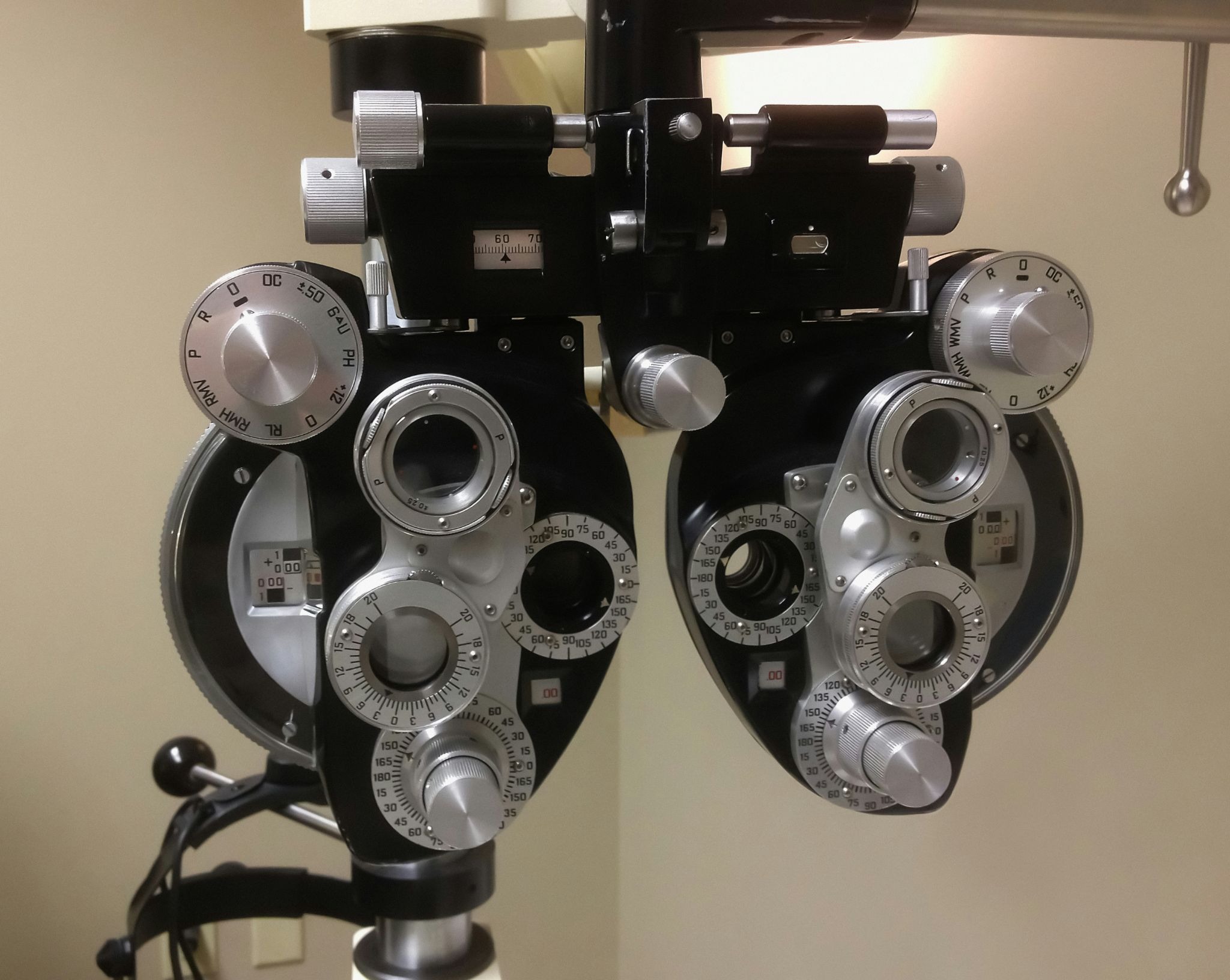
Then, the doctor will typically ask you to look through lenses on a machine called a phoropter. This makes it easier to find the right lenses to correct an issue.
Understanding Nearsightedness Vs. Farsightedness and Other Refractive Errors
Refractive errors are some of the most common eyesight difficulties that may be diagnosed at this point in an eye exam. They are usually caused by a change in the shape of the eyeball that affects how well you can see. These include:
After you read the eye chart, the doctor will probably check your eye muscles by asking you to follow a light with your eyes. They will also do a visual field test to check your peripheral vision.
Other Tests at an Eye Exam
In some cases, an eye exam will end after these routine tests. But if your doctor suspects a problem, or has concerns based on your personal or family history, they may want to run some additional tests:
- A slit-lamp exam. The doctor uses a powerful microscope to get an up-close look at various structures in your eye. In some cases, it can help identify issues like glaucoma or cataracts early.
- Tonometry. Another tool to screen for glaucoma, this test measures pressure inside the eye.
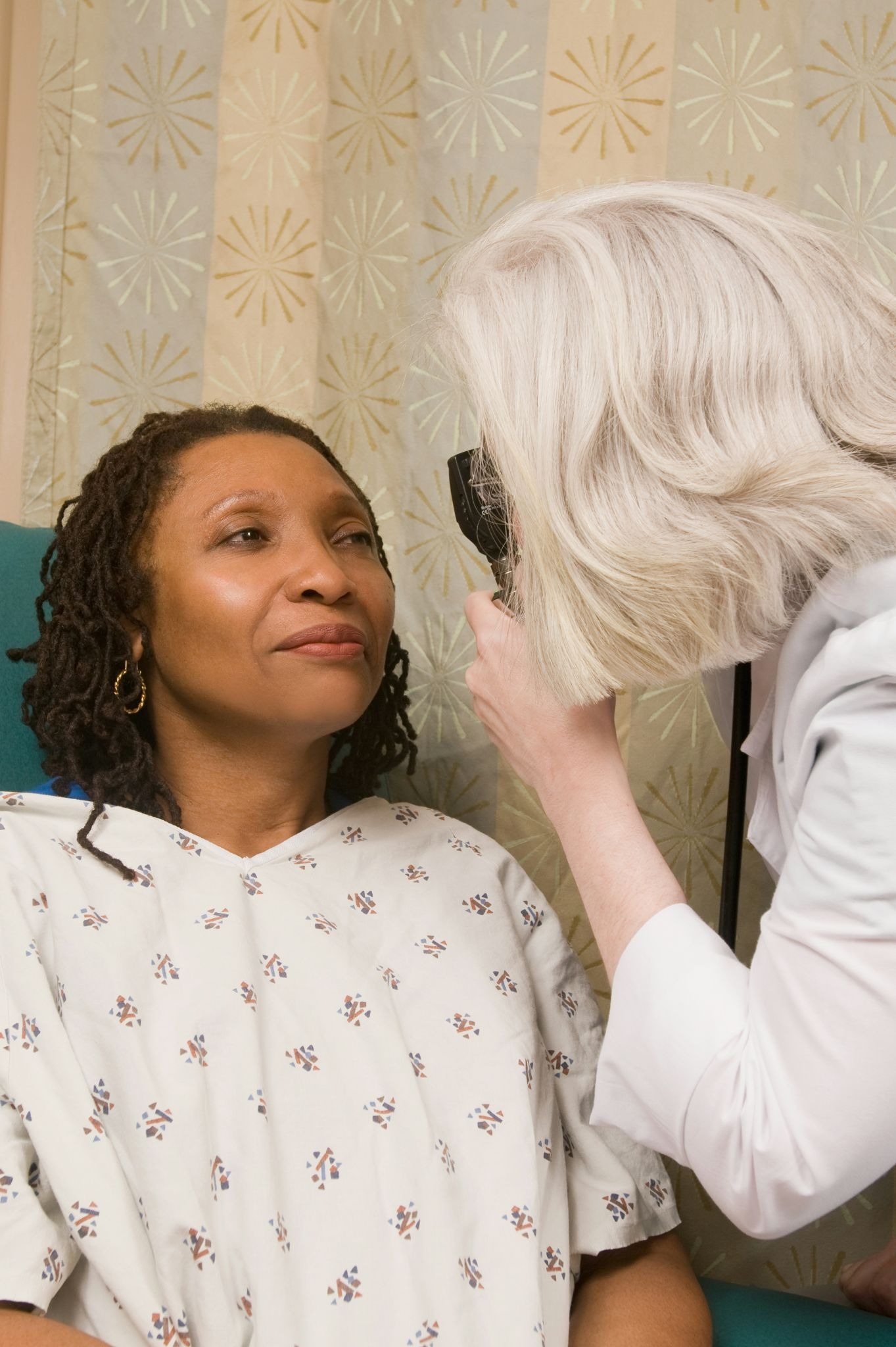
- Dilated eye exam. This test is a bit more involved than the others. The doctor will use eye drops to dilate your pupils, so they can closely examine the retina and optic nerve. It can detect conditions like diabetic retinopathy, glaucoma, cataracts, and macular degeneration. Because your vision will be blurry for several hours after, the optometrist will usually warn you to bring someone who can drive you home.
What Happens if the Eye Doctor Identifies a Vision Problem?
It depends on the specific problem, but many vision difficulties are treatable. Corrective lenses are usually helpful for refractive errors, and most patients start out with glasses. However, if you find that you don’t like glasses, you may also consider contact lenses. If you do want to try contacts, you’ll typically need to schedule a contact lens fitting with the eye doctor.
There are also treatments available for glaucoma, macular degeneration, cataracts, and diabetic retinopathy. These might include medications, eye drops, eye injections, or surgery, depending on your situation.
FAQs
How do I find the right pair of glasses for my face?
Buying your first pair of glasses can be tough. On one hand, there are tons of different frames to choose from in many different styles. But on the other hand… there are tons of different frames to choose from, and that can be overwhelming!
You may want to start by narrowing your choices down to a specific style. If you’re buying online, try using a site that has a good amount of filters to help you out. For instance, on eyewear retailer EZContacts, you can filter by size, shape, and more.
You can also search by other filters, like frame color, material, or a brand you like. For example, if you like the style of Versace glasses frames, you could filter by that specific brand.
Do I have to buy my glasses at the same place that prescribed them?
No. Eyewear stores often have a doctor who does eye exams, and optometrists often sell frames/contact lenses. This can be convenient for people who want to get everything done at once.
However, it’s always a good idea to comparison shop before you make your final buying decision. If you see a pair of frames you love at your eye doctor’s office, try writing down the brand and style number, then search for it online. You might find it at a much better price.
Conclusion
Regular eye exams play an important role in maintaining clear vision and protecting long-term eye health. Understanding what happens during an eye exam can help you prepare for your appointment and feel more comfortable with the testing process. From checking visual acuity and identifying refractive errors to screening for serious eye conditions, these examinations help detect potential problems before they worsen. Schedule routine eye exams as recommended by your eye care professional, and seek an earlier assessment if you notice changes in your vision, eye pain, or other concerning symptoms. Early detection and appropriate treatment can help preserve your eyesight and support better eye health.


