

Overview
At-home vagus nerve stimulation (VNS) is gaining attention as a non-invasive approach to supporting stress management and nervous system regulation. Transcutaneous auricular vagus nerve stimulation (taVNS) uses electrodes placed around the ear to stimulate vagus nerve pathways without surgery. Research suggests potential benefits for perceived stress and certain physiological stress responses, although results vary depending on stimulation protocols, session frequency, and individual responses. Understanding the available evidence, recommended device usage, safety precautions, and realistic expectations can help individuals make informed decisions. While VNS may complement a broader stress-management routine, it should not replace medical care, adequate sleep, physical activity, or psychological support.
At-Home Stress Support: What to Know About Vagus Nerve Stimulation Frequency, Safety, and Realistic Expectations
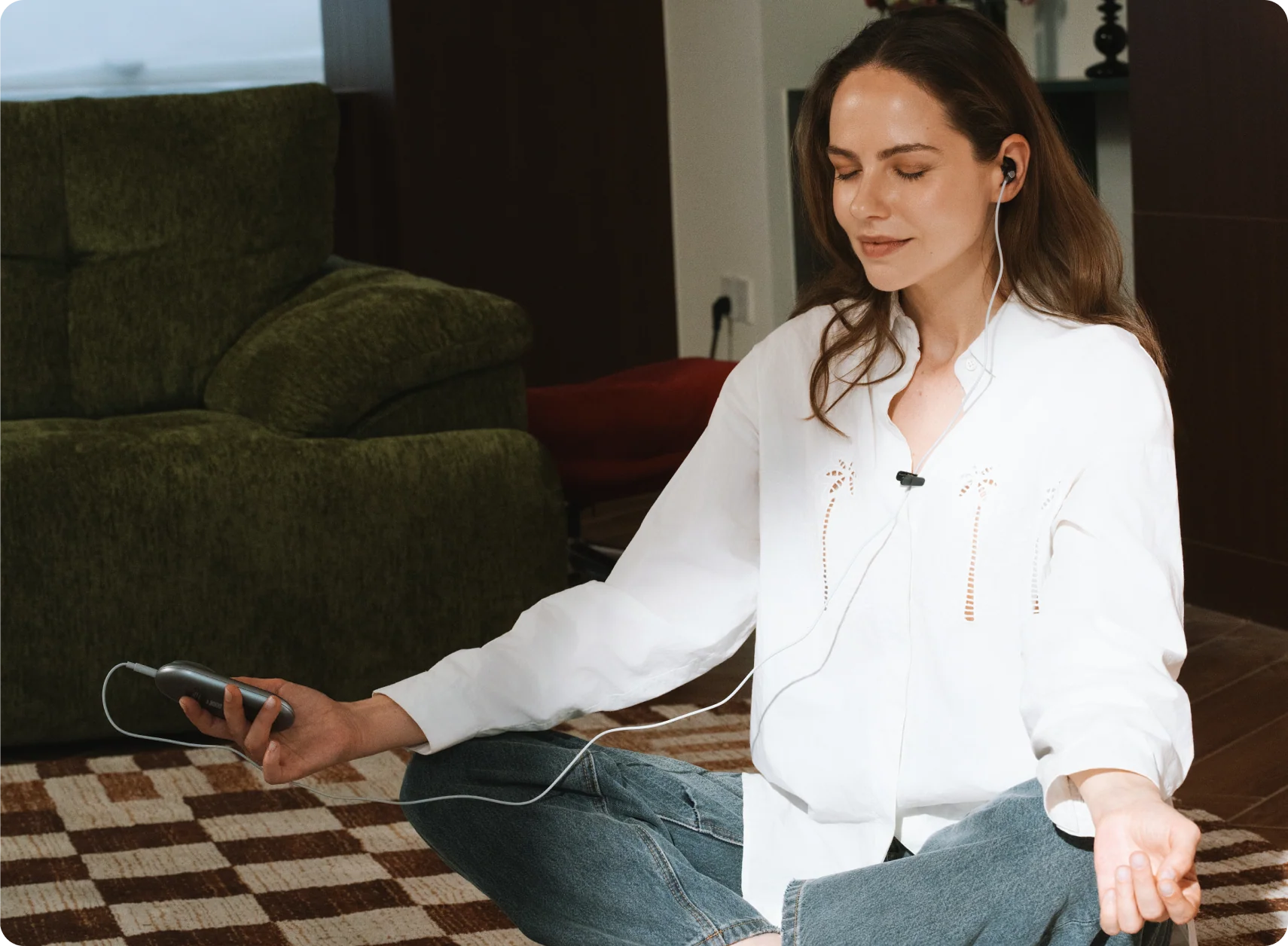
The session has ended, and even after the discussion we had, your brain has not stopped and continues with racing thoughts. This means that you still have a variety of physical symptoms. In the case of VNS, what matters is not whether the device can do something for you, but what it can do to influence how the nervous system works non-invasively. What is crucial is the data that proves the effectiveness of this type of treatment.
Why the Vagus Nerve Is Relevant to Stress
Stress causes activation of the sympathetic nervous system, thus increasing alertness, whereas the HPA axis, i.e., the hypothalamic-pituitary-adrenal system, activates the slow stress responses by secreting hormones, especially cortisol. As was mentioned above, the first-mentioned type of stress reaction is positive and has benefits. When an individual gets used to continuous stress, problems caused by stress reactions appear that cannot be controlled, as there is no time to relax.
The vagus nerve connects the brain and several organs and, as it turns out, is part of the parasympathetic nervous system, which regulates a variety of physiological processes in the body. Although one might imagine that it is a simple switch that turns off a stress response, it is one of numerous possible ways to modulate that response. In terms of transcutaneous VNS, the goal is to stimulate vagus nerve pathways, but not through an electrode, and not as in standard VNS, which involves surgery. In TA VNS, an electrode is placed in the area of the patient's ear since the ear is connected with the vagus nerve through its branches.
It is common to assume that a large amount of stimulation is necessary to activate nerves. However, the presence of any sensation during stimulation will vary with changes in skin conditions and the body surface being stimulated. The concha of the ear is very small and curved. Hence, even slight movement of the electrodes can lead to sensations of tingling in a particular region. To solve the issue of tingling, it is essential to ensure that the electrode is positioned correctly and that the product specified by the manufacturer to be used is utilized.
For consumers evaluating a non-invasive vagus nerve stimulation device, practical differences include whether it stimulates the ear or neck, how firmly the electrodes contact the skin, what session settings are available, and what safety restrictions apply. A consumer wellness device is not interchangeable with an implanted medical therapy or a prescription device approved for a specific condition.
What Human Research Shows—and What It Does Not
Numerous distinct results were explored when researching the impacts of vagus nerve stimulation under conditions of stress. Heart rate variability measures the fluctuation of time intervals between heartbeats and is associated with the regulation of autonomic functions. It can also vary according to breathing, physical exertion, body position, and sleeping patterns. Cortisol is a highly rhythmic hormone, which may fluctuate rapidly in response to stress-inducing circumstances. Stress measurement scale questionnaires reflect individuals' views about their levels of perceived stress.
Thus, we cannot claim that all results will be similar. A 2023 cross-over study with sham control conditions included 19 healthy younger participants. Researchers examined auricular VNS and peripheral VNS in conditions of acute stress. Researchers have noticed some differences in relation to cardiovascular indicators, showing the effect of VNS on physiological stress responses. It should be noted, however, that researchers studied VNS in small samples in a controlled environment. Therefore, we cannot yet determine if VNS in an everyday setting at work or home will be beneficial.
Another randomized study conducted in 2025 in which researchers enrolled 70 community residents who had subthreshold emotional symptoms was also presented. It was reported that among all study participants, better improvement occurred in terms of perceived stress and anxiety symptoms, and the improvement was achieved among the people who had received active stimulation during the early intervention, compared with participants of the sham session. The advantage did not manifest among participants who received active stimulation after the early intervention group. In addition, active stimulation was not better than the sham session for depression. As per the study protocol, all of the participants received four stimulation sessions per day lasting two weeks, whereas this was much more compared with occasional wellness programs.
One thing we should consider is the sham treatment group. In this case, the sham treatment does not have a physiological impact because earlobe stimulation activates only non-vagal sensory nerves, whereas the active group receives some treatment effect. As a result, it becomes difficult for researchers to distinguish active from sham stimulation due to the placebo effect. For example, if the electrodes had been placed somewhere other than the earlobes, they would have had a different physiological impact.
The conclusion is that taVNS does not necessarily lead to no effect or reliable stress relief because there are numerous studies using different electrodes, durations of treatment, and different outcome measurements. It is important to keep in mind that just because a study showed benefit with a protocol, it does not mean all devices using the same technology have the same benefits. Evidence from a particular protocol does not validate every device using the same technology. Readers who want to examine the distinction between reported relief and physiological findings can explore the research on vagus nerve stimulation for stress.
How Often Should You Use an At-Home Device?
An appropriate definition of a "dose" should consist of several key parameters, namely: number of sessions per day, duration of each session, frequency of pulsation, stimulation intensity, and a placement of electrodes on the human body. In fact, the concept of "dose" should be defined separately from the total time span of the device usage, something most people do not realize.
Take the example of the ZenoWell product from the ZenoWell manufacturer. According to the instructions, there must be two "sleep" sessions at 20-minute intervals before bedtime and one "relax" session of 20 minutes when a person wants some extra recovery after stressful situations.
In addition, the manual does not explain what the pulsation frequency for all users of the device.
There are also situations where a regular practice doesn’t seem to serve a useful purpose. For example, someone trying to implement a pre-sleep routine should not merely trust the “recovery” rating provided by the smartwatch as evidence that the routine caused an increase in “relaxation.” Similarly, someone exploring daytime practice of relaxation may compare tension ratings on the 0–10 scale before and after their practice session; it could be that the practice itself caused a decrease in stress, or the fact that the practice involved some time lying still had some role to play. In both cases, the intervention will be missing evidence for effect on outcome if there is no appropriate control or comparison. But to the extent that someone uses these as indicators of change, it's useful.
A great way to record something at home is as straightforward as noting what the practice entailed: mode, time (i.e., duration), intensity, the comfort during the experience, and any symptoms one noticed.
Safety: When to Stop or Seek Advice
In 2022, a systematic review and meta-analysis of 177 taVNS studies and over 6,322 participants noted that a few adverse events were mentioned in the included studies, such as ear pain, tingling, and headache. Active stimulation was not significantly associated with increased risk of adverse events, although adverse events were under-reported by the majority of the studies in the literature. The fact that adverse events were not observed as a function of taVNS does not imply it is safe to continue its use for longer periods or unsupervised conditions.
When using a wearable product with electrodes, it is important to ensure proper and clean placement of electrodes on each side of the ear. If the sensation decreases, first verify the proper placement and alignment of the stimulation device before trying to increase the intensity or increasing the frequency. If you have an uncomfortable sensation such as pain, heat, dizziness, or skin irritation, please stop the use and consult with a medical professional. Do not use the stimulation device for driving and/or while handling machinery and/or in the bathroom or while you are asleep unless your stimulation device instructions allow for this.
Pregnant women should also consider carefully before initiating any form of electrical stimulation. If they experience new chest pain, fainting, a severe new headache, or new neurological symptoms, they should contact their healthcare provider, rather than experimenting with changing device settings.
Where VNS Fits in a Realistic Stress Plan
No device is going to help an individual who suffers from an unsustainable workload, untreated anxiety, prolonged sleep issues, or an unresolved medical issue. To reduce stress in an individual, you have to consider things such as sleep, movement, breathing, the presence of social support, and psychological interventions. The importance of at-home stimulation devices as optional, but highly structured, wellness practices will provide benefits or a tolerance for the individual, without any over-the-top claims.
There are a number of factors that are even more important to patients than the exciting things people claim about a specific device: the pathways for these devices, how the protocols of these devices work, and whether the patient is being informed about the possible ways they can safely use a specific device.
References
- Sanchez-Perez JA, et al. Effects of transcutaneous auricular vagus nerve stimulation and median nerve stimulation on reducing acute stress in healthy young adults: a single-blind, sham-controlled cross-over study. Frontiers in Neuroscience, 2023;17:1213982.
- Jackowska M, et al. Effects of transcutaneous vagus nerve stimulation on subthreshold affective symptoms and perceived stress: insights from a single-blind randomized trial conducted among community-dwelling adults. Biological Psychology, 2025;202:109169.
- Kim AY, et al. Safety profile of transcutaneous auricular vagus nerve stimulation (taVNS): A systematic review and meta-analysis. Scientific Reports, 2022;12:22055.
- Farmer AD, et al. International consensus-based systematic review and recommendations for minimum reporting standards in transcutaneous vagus nerve stimulation studies. Frontiers in Human Neuroscience, 2021;14:568051.
Conclusion
At-home vagus nerve stimulation offers a promising but still developing approach to stress management. Although some human studies have reported improvements in perceived stress and physiological stress responses, the evidence does not establish that every device or stimulation protocol will deliver the same results. Understanding session frequency, electrode placement, stimulation intensity, and safety guidelines is essential before using an at-home device. Individuals should monitor their responses, follow manufacturer instructions, and seek medical advice if they experience discomfort or unusual symptoms. Most importantly, VNS should be considered a complementary wellness approach rather than a standalone solution. Combining safe device use with healthy sleep habits, regular movement, breathing exercises, and appropriate psychological support can contribute to a more balanced stress-management plan.


